
Tesseract — Modular Direct-to-Object Printing for High-Mix Production
The packaging landscape that served consumer packaged goods companies for the last three decades is fracturing. SKU counts have proliferated by 30% or more at major manufacturers in the last five years. Seasonal and limited-edition campaigns that once followed annual calendars now follow social media cycles. Direct-to-consumer channels demand packaging variants that traditional decoration methods were never designed to accommodate. And regulatory environments across global markets continue to add complexity to every label variant a company maintains.
The result is a growing structural gap: product development and marketing teams can conceive and formulate new products in weeks, but the packaging decoration supply chain still operates on timelines measured in months. Preprinted label inventories tie up capital. Minimum order quantities force overproduction. Changeover windows measured in 30 to 60 minutes per SKU transition consume production capacity. And when a regulatory change, a reformulation, or a market withdrawal renders existing inventory obsolete, the write-off hits the bottom line directly.
The Tesseract platform, developed by Norwalt Digital, represents a structural shift in how manufacturers approach container decoration. It is not an incremental improvement to existing labeling lines. It is a modular, tile-based direct-to-object digital printing system that eliminates the physical supply chain between artwork approval and decorated container. Operating at 60 to 80 parts per minute with 600 to 600-1200 DPI resolution using CMYK inksets, optional gamut extenders, additional spot colors, and selective matte or gloss varnish using UV LED curable inks, the Tesseract delivers consumer-ready print quality on plastic, glass, and metal substrates—from small pharmaceutical vials to full-size personal care bottles.
The economic implications extend well beyond per-unit decoration cost, which can be reduced to as little as one-tenth the cost of traditional labeling in certain applications. The larger value proposition lies in what digital decoration enables at the business level: push-button artwork changeover with no tooling changes, true MOQ1 production capability, elimination of label inventory carrying costs and obsolescence risk, and the ability to respond to market opportunities in days rather than months.
The Tesseract platform is designed for application-specific print configurations from 600 to 1200 DPI. Standard CMYK can be expanded with gamut extenders such as orange, green, violet, light cyan, light magenta, and light black, as well as additional spot colors where the application requires brand-specific color control. Selective varnish capability can support matte or gloss effects for protection, finish, and shelf impact.
Norwalt is not a printer company. We are a custom automation company with more than 50 years of experience building production-grade machinery for the world’s largest CPG and pharmaceutical manufacturers. The hardest problems in direct-to-object printing are not about the printhead—they are about handling containers at speed, maintaining precise orientation through multi-station processes, integrating pre-treatment and curing inline, and connecting decoration seamlessly with upstream and downstream production. These are automation problems, and automation is what Norwalt has built its reputation on.
When a VP of Packaging or a Director of Manufacturing evaluates the Tesseract, they are not buying a printer. They are hiring a capability. Understanding the actual job the buyer needs done—and the dimensions of that job that extend far beyond the technical specification sheet—is essential to evaluating whether digital decoration belongs in your operation.
Help me launch, test, and revise packaging faster than my competitors so I capture market windows and shelf space.
This is the fundamental hiring criterion. The packaging decoration system that earns its place on the production floor is the one that collapses the timeline between a go-to-market decision and a decorated container ready for distribution. Every week shaved off a launch timeline is a week of revenue captured, a week of competitive advantage established, and a week of shelf space secured before a competitor can respond.
The core job is supported by a constellation of secondary jobs that collectively determine whether the investment case holds together:
At the functional level, the job is straightforward: decorate containers at production speed with print quality that meets consumer acceptance thresholds, while maintaining the flexibility to change artwork without mechanical changeover. The Tesseract addresses this with 60–80 parts per minute throughput, 600 to 600-1200 DPI resolution, expanded-gamut and spot-color capability, selective varnish options, and push-button artwork changeover.
At the emotional level, the buyer is hiring confidence. Confidence that a new product launch will not be held hostage by the decoration supply chain. Confidence that a regulatory change can be absorbed without a write-off conversation with the CFO. Confidence that when the CEO asks for a limited-edition run supporting a social media moment, the answer is “yes, by Thursday” rather than “we need 3 to 6 months on large-scale projects.”
At the social level, the buyer is hiring credibility within their organization. The packaging director who brings digital decoration into the operation positions themselves as the person who solved the agility problem, who eliminated the write-off line item, who enabled marketing to move at the speed they have been demanding. This is a career-defining capability decision, not a procurement exercise.
The question is not whether you can afford to invest in digital decoration. The question is whether you can afford the market windows you are missing while your competitors are not constrained by 3 to 6 month label lead times, which can reach 3 to 6 months on large-scale projects on large-scale projects.
The forces compressing product launch timelines are structural, not cyclical. They are not going to reverse. Understanding these drivers is critical to evaluating whether digital decoration is a tactical improvement or a strategic necessity.
Private label and retailer-owned brands have grown share steadily across virtually every CPG category. In response, branded manufacturers must differentiate more aggressively and more frequently. This means more SKUs, more seasonal variants, more limited editions, and more retailer-specific packaging—all of which multiply the decoration burden. The manufacturer that cannot respond to a retailer’s exclusive packaging request within weeks, not months, risks losing the shelf placement entirely.
DTC channels have created consumer expectations for personalization, rapid iteration, and packaging that reflects current brand narratives. A DTC brand that launches a seasonal scent or a limited-edition collaboration cannot wait for a label converter’s production queue. The packaging must move at the speed of the marketing calendar, which increasingly means the speed of social media cycles.
Regulatory requirements across global markets are becoming more demanding and more volatile. Ingredient disclosure rules, warning label requirements, dosing instructions, and market-specific compliance language all create label variants. When regulations change—as they do with increasing frequency in pharmaceutical, nutraceutical, and personal care categories—every affected label variant must be updated. Under traditional workflows, this triggers a cascade of prepress work, converter coordination, and inventory write-offs. Under digital workflows, it triggers a file update.
Consumers, particularly in premium personal care and wellness categories, increasingly expect products that feel curated rather than mass-produced. Limited runs, seasonal variants, and region-specific packaging are no longer differentiators—they are table stakes. The manufacturer whose decoration infrastructure can only economically produce runs of 50,000 identical containers is structurally disadvantaged against a competitor who can economically produce runs of 500.
The gap between how fast product development and marketing can move and how fast the decoration supply chain can respond is not just an operational inconvenience. It is a competitive liability. Every product launch delayed by decoration lead times is revenue deferred, market position conceded, and competitive advantage surrendered.
Product development has gone digital. Marketing has gone digital. Manufacturing has gone digital. Decoration is the last analog bottleneck in the CPG value chain.
Every pressure-sensitive label, shrink sleeve, or pad-printed container in your facility represents the end point of a supply chain that most operations leaders have learned to live with rather than challenge. Examining that supply chain reveals structural constraints that digital decoration eliminates entirely.
A pressure-sensitive label begins with artwork creation, moves through prepress preparation and plate or cylinder production, requires substrate selection and procurement, passes through a converter’s print queue, undergoes quality verification, ships to your facility, enters your warehouse inventory, and finally reaches the labeling machine. Each step adds lead time, cost, and risk. The total elapsed time from artwork approval to label availability at the production line typically ranges from 6 to 12 weeks.
Minimum order quantities from label converters force manufacturers to purchase labels in volumes that may represent months of production for a given SKU. This inventory sits in warehouses, tying up working capital and occupying space. For a manufacturer with 200 active SKUs, each carrying two to four months of label inventory, the capital commitment is substantial—often representing hundreds of thousands of dollars in preprinted material that has no alternative use if the product, formulation, or regulatory environment changes.
Pressure-sensitive labels on curved, tapered, or textured containers present ongoing quality challenges. Flagging edges, bubbling under temperature variation, and adhesive interaction with container material all contribute to scrap rates and consumer complaints. Shrink sleeves address some of these issues but introduce their own problems: distortion on complex geometries, limited recyclability (particularly PVC), and the infrastructure requirements of shrink tunnels.
A pharmaceutical or personal care manufacturer selling across 40 or more markets may maintain 2,000 or more label variants. Each variant must be managed, versioned, stored, and tracked. When a regulatory change affects ingredient disclosure or warning language in a single market, the update cascades through the prepress, converter, inventory, and production systems. Under traditional workflows, this is a project measured in weeks and dollars. Under digital workflows, it is a file update measured in minutes.
Pressure-sensitive labels generate liner waste—the silicone-coated backing material that is peeled off and discarded during application. This waste stream is difficult to recycle and is coming under increasing regulatory scrutiny. Extended Producer Responsibility (EPR) regulations in the EU and emerging frameworks in other markets are creating financial liability for liner waste. Direct-to-object printing eliminates this waste stream entirely, producing zero liner waste and requiring no adhesive.
Modern CPG operations have invested heavily in flexible manufacturing: agile formulation, modular filling lines, rapid changeover packaging equipment. Yet the most consumer-visible element of the product—its decoration—remains locked in a fixed, inventory-heavy, slow-changeover workflow. The production line can switch products in minutes. The decoration supply chain takes weeks.
The conventional framing of decoration economics focuses on per-unit cost: what does it cost to decorate each container? This framing is incomplete and, for high-mix operations, fundamentally misleading. The real economic impact of decoration decisions plays out across dimensions that per-unit cost calculations do not capture.
Label and sleeve inventory is not free to hold. Warehouse space, environmental controls, inventory management systems, cycle counting, and the opportunity cost of capital all contribute to carrying costs that typically run 15% to 25% of inventory value annually. For a manufacturer carrying $500,000 in preprinted label inventory, carrying cost alone represents $75,000 to $125,000 per year before a single label is rendered obsolete.
Traditional labeling equipment changeovers for different container shapes, label sizes, or application configurations consume 30 to 60 minutes per changeover. In a high-mix environment running 20 or more SKU transitions per week, changeover downtime represents 10 to 20 hours of lost production per week. At typical production line throughput values, this translates directly to thousands of units of lost output.
This is the line item that rarely appears in the decoration cost analysis but regularly appears in the P&L. A brand refresh, a regulatory change, a product reformulation, or a market withdrawal can render preprinted label inventory worthless overnight. For companies with large SKU portfolios operating across multiple markets, annual obsolescence write-offs commonly reach six figures. For large multinational manufacturers, seven-figure write-offs are not uncommon during major brand transitions.
The labor cost of managing relationships with label converters, coordinating prepress changes, reviewing proofs, managing purchase orders, tracking deliveries, and reconciling invoices is real but rarely quantified. For a mid-size manufacturer, the fully loaded cost of the personnel dedicated to label procurement and management often exceeds $200,000 annually.
Consider a prestige beauty brand launching a product around a trending ingredient. Traditional decoration timeline: artwork finalization (1 week), prepress and proofing (2 weeks), converter queue and production (3–5 weeks), shipping and receipt (1–2 weeks), production scheduling (1 week). Total: 8 to 12 weeks. With digital direct-to-object decoration: artwork finalization (1 week), file preparation and color matching (1–2 days), production (immediate). Total: approximately 1.5 weeks.
The per-unit label cost might be $0.07 for a traditional pressure-sensitive label versus under $0.01 for digital decoration. But the per-unit comparison misses the point entirely. The value of digital decoration in this scenario is not the $0.06 per unit saved. It is the revenue captured by reaching the market six to ten weeks ahead of the traditional timeline—revenue that, for a trending product in the beauty category, can represent the difference between capturing a trend and missing it entirely.
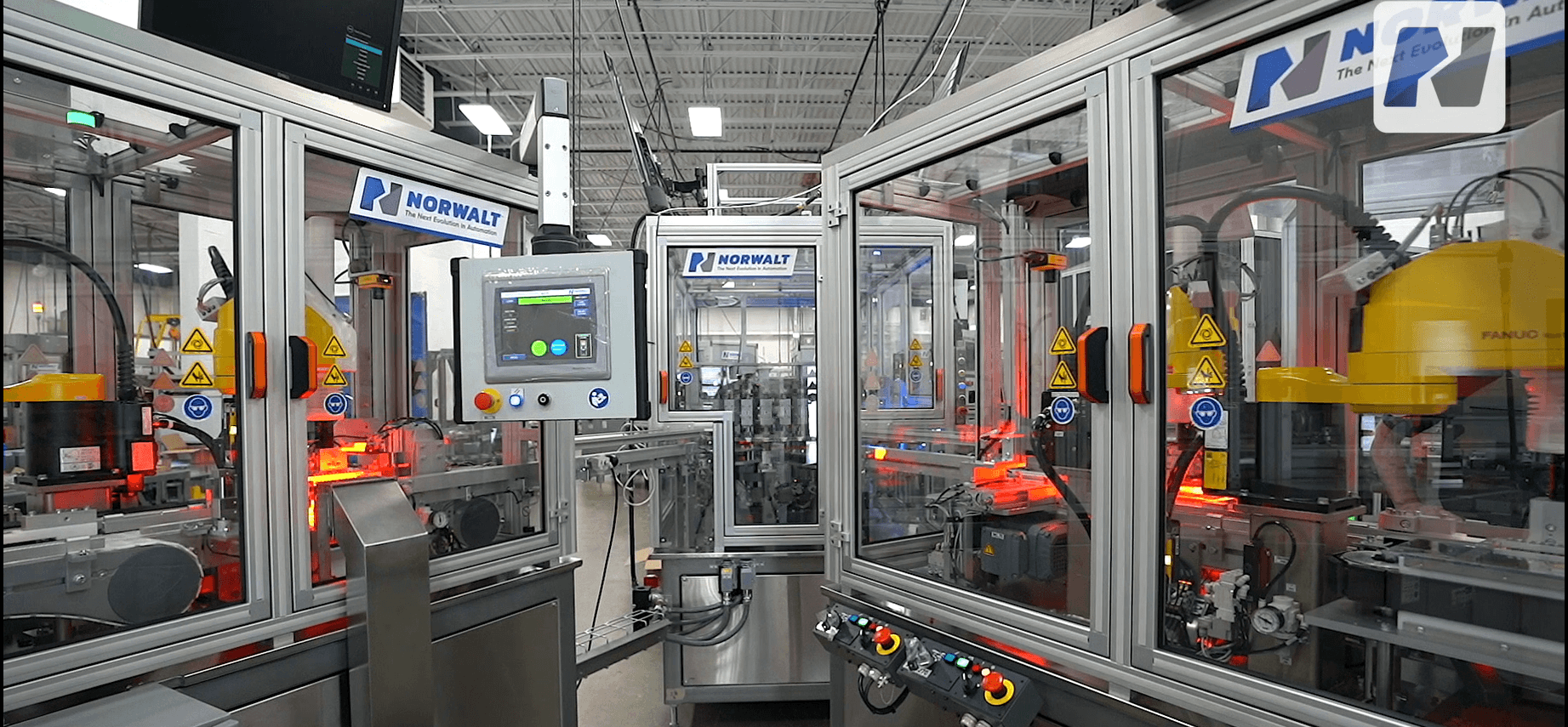
The Tesseract platform is designed from the ground up as production-grade automation equipment, not a laboratory printer repurposed for manufacturing. Its architecture reflects decades of experience building container handling and decoration systems for the most demanding production environments in CPG and pharmaceutical manufacturing.
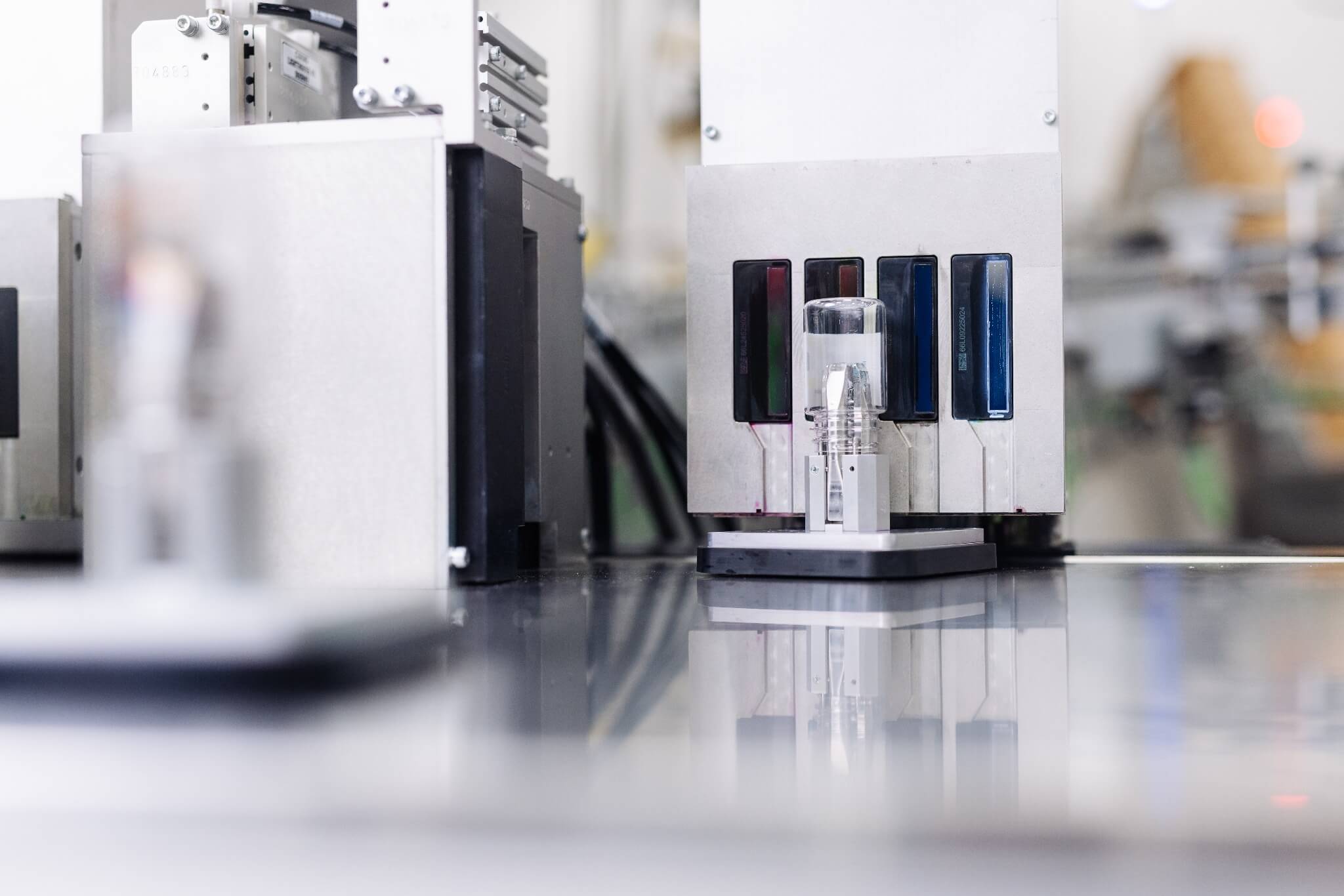
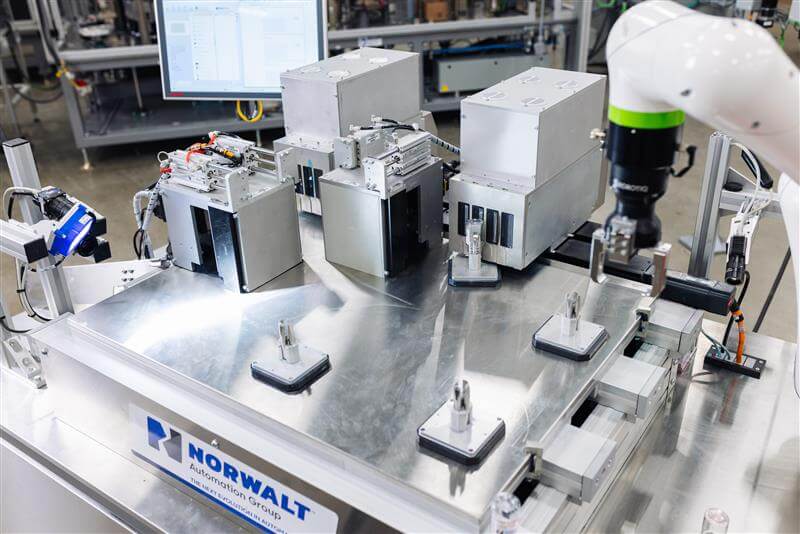
The core innovation of the Tesseract platform is its tile-based modular architecture. Each tile is an independent print station containing its own printhead array, UV LED curing system, and precision motion control. Tiles operate independently but are orchestrated by a central control system that manages container flow, print sequencing, and quality verification across the entire platform.
This architecture delivers two fundamental advantages. First, it enables modular scaling: production capacity is increased by adding tiles, not by replacing the entire system. A facility can deploy an initial configuration matched to current volume and add capacity incrementally as demand grows or as additional product lines are brought onto the platform. Second, it provides redundancy: if a single tile requires maintenance, the remaining tiles continue to operate, reducing the impact of any individual component issue on overall production uptime.
The Tesseract handles containers ranging from small pharmaceutical peptide vials to full-size shampoo and personal care bottles. Containers are precisely oriented, held, and rotated through the printing process using handling systems designed for the specific container geometries in the customer’s product portfolio. The system accommodates round, oval, and shaped containers across plastic, glass, and metal substrates.
This is where the automation heritage matters most. Handling a container at speed through a multi-station printing process while maintaining the positional precision required for 600 to 600-1200 DPI print quality is an automation challenge that demands the kind of mechanical engineering, motion control, and process integration expertise that Norwalt has spent five decades developing.
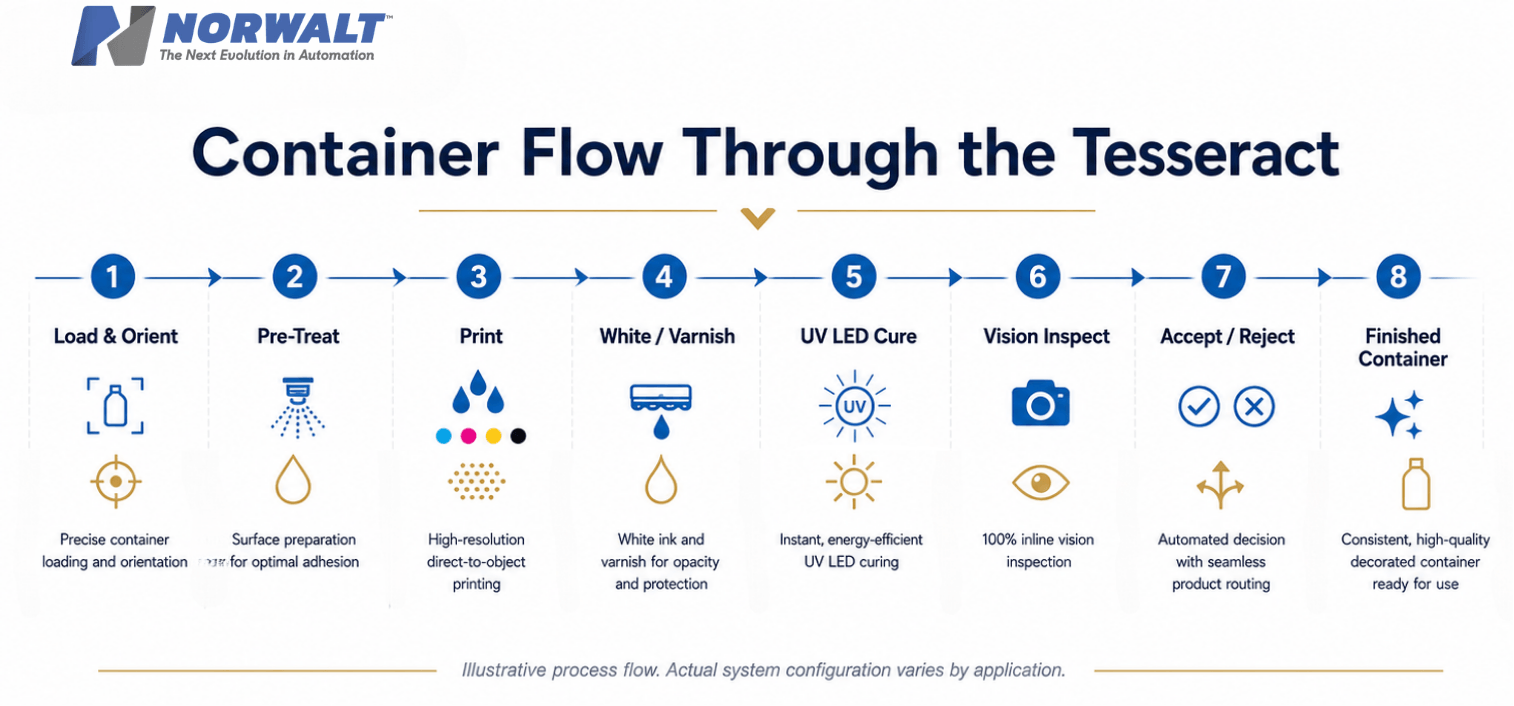
Achieving durable ink adhesion on production containers requires surface pre-treatment appropriate to the substrate. The Tesseract integrates flame, corona, or plasma pre-treatment inline, immediately upstream of the print stations. The pre-treatment method is selected during the application engineering process based on the specific substrate, container geometry, and production requirements. This integration eliminates the need for offline pre-treatment steps and ensures that every container entering the print stations has been consistently prepared.
Unlike printers that attempt to use a single generic ink across all substrates, the Tesseract’s ink system is formulated from the inkset out for each specific substrate and application. This approach ensures optimal adhesion, color vibrancy, durability, and regulatory compliance for each customer’s specific containers and end-use requirements. The ink formulation process is part of the application engineering engagement, and the resulting ink profiles become part of the production recipe for each container type.
Production-grade decoration requires production-grade quality verification. The Tesseract integrates vision inspection systems that verify print quality, registration accuracy, and defect detection inline, at production speed. Every container is inspected. Defective containers are automatically rejected. Quality data is logged for traceability and process control. This is not a sample-based QC process—it is 100% inline inspection.
The Tesseract’s tile-based architecture is not just a design choice—it is a strategic capability that aligns with the broader trend toward flexible, modular manufacturing that is reshaping how the world’s most sophisticated manufacturers approach production capacity.
Traditional decoration systems are monolithic: you purchase a system sized for your projected peak capacity, and that system represents a fixed investment regardless of whether you are running at 20% or 100% utilization. The Tesseract inverts this model. You deploy an initial configuration matched to your current production requirements and validated against your specific containers and artwork. As volume grows, as additional product lines are brought onto the platform, or as the business case extends to new SKU families, additional tiles are added to increase capacity.
This modular approach to capacity investment has several implications for manufacturing leadership:
Scale by adding tiles, not by replacing systems. The Tesseract grows with your business because it was designed to grow with your business.
In traditional decoration workflows, artwork is a physical supply chain. It exists as plates, cylinders, screens, or preprinted material. Changing artwork means changing physical tooling, procuring new physical inventory, and managing the logistics of physical material flow. Every artwork change has a lead time, a minimum order, and an obsolescence risk.
On the Tesseract platform, artwork is a file. A digital production recipe. Changeover from one artwork to another is accomplished by loading a file and pressing start. There is no tooling to swap. There is no minimum order to meet. There is no preprinted inventory to manage or write off. The artwork lives in a digital asset management system, version-controlled and instantly accessible.
Color and finish specifications can also be managed as part of that recipe. A product can run in standard CMYK, expanded gamut with channels such as orange, green, violet, light cyan, light magenta, or light black, or a configuration that includes additional spot colors for brand-critical graphics. Matte or gloss varnish can be selectively applied to emphasize design elements or tune the final appearance of the decorated container.
This shift—from artwork as a physical supply chain item to artwork as a digital production recipe—is the decoration equivalent of what digital tools did for product development and what digital marketing platforms did for campaign execution. It removes the physical constraints that forced batch thinking and replaces them with the flexibility of digital workflows.
The practical implications for production operations are profound. True MOQ1 production becomes economically viable—you can print a single container with unique artwork at the same per-unit cost as printing ten thousand identical containers. Run lengths are determined by demand, not by label minimum order quantities. Market-specific variants, promotional packaging, and test-market configurations are all executed through file management rather than supply chain management.
Traditional labeling changeover: 30–60 minutes of mechanical adjustment, label web threading, adhesive system calibration, and alignment verification. Tesseract changeover: load artwork file, confirm color profile, press start. The mechanical system does not change. The container handling does not change. Only the digital recipe changes.
The direct-to-object printing market includes participants approaching from the printing technology side: companies whose core expertise is printheads, ink chemistry, and image processing. Norwalt Digital approaches from a fundamentally different direction, and this distinction matters for manufacturers evaluating production-grade equipment.
Norwalt Automation Group has spent more than 50 years building custom automation lines for the world’s largest CPG and pharmaceutical manufacturers. The company’s engineering heritage is in solving the mechanical, motion control, and systems integration challenges that determine whether a manufacturing process runs reliably at production speed, shift after shift, in real factory environments.
In direct-to-object printing, the hardest engineering problems are not in the printhead. Modern industrial inkjet printheads are sophisticated and capable. The hardest problems are in everything else:
These are automation problems. They require automation engineering, automation manufacturing expertise, and the kind of production-environment experience that comes from decades of building and supporting equipment in the most demanding manufacturing facilities in the world. This is what Norwalt brings to the Tesseract platform, and it is the reason we describe ourselves as a printing automation company rather than a printer company.
The economic case for digital decoration must be evaluated at the total-cost-of-ownership level, not at the per-unit decoration cost level. While per-unit cost comparisons favor the Tesseract in most applications, the full economic impact encompasses cost categories that traditional per-unit comparisons do not capture.
| Dimension | Traditional Labels / Sleeves | Tesseract Digital Decoration |
|---|---|---|
| Order Lead Time | 6–12 weeks from artwork approval to label availability | Same day; artwork file loaded directly to production |
| Inventory Model | Preprinted inventory required; MOQ-driven overproduction | Zero label inventory; decoration on demand |
| SKU Changeover | 30–60 minutes mechanical changeover per transition | Push-button file change; no mechanical adjustment |
| Container Shapes | Label/sleeve design constrained by geometry; adhesive issues on curves | Prints directly on round, oval, and shaped containers |
| Sustainability | Liner waste, adhesive residue, PVC sleeve recyclability concerns | Zero liner waste; no adhesive; no sleeve material |
| Per-Unit Decoration Cost | ~$0.05–$0.12 depending on label complexity | Under $0.01 in many applications (up to 1/10th traditional cost) |
| Quality Risk | Adhesive failures, flagging, bubbling, distortion on curves | Ink bonded to substrate; 100% inline vision inspection |
| Scalability | System replacement required for capacity increases | Add tiles incrementally; no system replacement |
| Minimum Order | 5,000–50,000+ units depending on converter | MOQ1 — single unit production is economical |
| Artwork Versioning | Physical plates/cylinders; version management is manual | Digital files; version-controlled asset management |
Direct material cost reduction of up to 90% in favorable applications. For a manufacturer decorating 5 million containers annually at an average label cost of $0.07, the annual material cost is $350,000. At under $0.01 per unit with Tesseract, the annual ink and consumable cost drops to under $50,000—a saving of approximately $300,000 per year in direct decoration material.
Eliminating preprinted label inventory eliminates the 15–25% annual carrying cost on that inventory. For manufacturers carrying $300,000 to $500,000 in label inventory, this represents $45,000 to $125,000 in annual carrying cost savings, plus the liberation of warehouse space and the reduction in inventory management overhead.
The financial impact of label obsolescence varies widely by company and industry, but is consistently material. Contract manufacturers report annual obsolescence write-offs in the low six figures. Pharmaceutical companies managing label variants across dozens of markets report write-offs that can exceed seven figures during regulatory change cycles. With digital decoration, there is no preprinted inventory to write off. The write-off line item drops to zero.
In a high-mix environment running 20 changeovers per week at 45 minutes average per changeover, the weekly changeover time is 15 hours. At a fully loaded labor rate of $50/hour plus the opportunity cost of lost production, changeover-related costs can exceed $150,000 annually. Push-button digital changeover effectively eliminates this cost.
While difficult to quantify precisely, the revenue impact of reaching the market months faster on large-scale projects is often the single largest economic benefit of digital decoration. In fast-moving categories—beauty, personal care, seasonal products—the revenue captured by being first to market with a trending product can exceed the entire annual cost of the decoration system.
Bringing decoration in-house eliminates converter margins, reduces procurement overhead, and removes supply chain risk. The fully loaded cost of managing external label vendors—procurement personnel, quality verification, logistics coordination, vendor management—typically represents $150,000 to $250,000 annually for a mid-size operation.
Eliminating liner waste removes a regulatory liability under current and emerging Extended Producer Responsibility frameworks. While the financial impact of EPR obligations varies by jurisdiction, the trajectory is toward increasing cost for label and sleeve waste. Digital decoration positions the manufacturer on the favorable side of this trend.
Per-unit cost tells you the price of decoration. Total cost of ownership tells you the price of your current decoration system’s constraints. Most manufacturers discover the constraints cost more than the decoration.
The following scenarios illustrate how the Tesseract platform addresses specific operational challenges across different manufacturing contexts. Each scenario represents a composite of real situations encountered by Norwalt’s engineering and commercial teams. In large-scale programs, traditional label and sleeve workflows can become a major schedule constraint, with lead times that can extend to 3 to 6 months once approvals, converter scheduling, materials, production, shipping, and line-readiness windows are factored in.
Situation. A contract manufacturer operates filling and packaging lines for 15 brand owners across personal care, household, and wellness categories. The facility manages more than 200 active SKUs, each with its own label artwork. Label inventory is managed across three warehouse locations. The procurement team manages relationships with four label converters to maintain supply continuity and competitive pricing.
Pain points. Annual label obsolescence write-offs exceed $180,000, driven by brand owner artwork changes, product discontinuations, and regulatory updates that render preprinted inventory unusable. SKU changeovers average 45 minutes each, with 25 to 30 changeovers per week consuming approximately 20 hours of production time. Label inventory carrying cost exceeds $90,000 annually. A dedicated procurement coordinator manages the label supply chain at a fully loaded cost of $85,000 per year.
Tesseract impact. Label obsolescence write-offs are eliminated entirely—there is no preprinted inventory to write off. Changeover time drops from 45 minutes to under 2 minutes per transition, recovering approximately 18 hours of weekly production capacity. Label inventory is eliminated, liberating warehouse space and working capital. The procurement coordinator’s role shifts from label supply chain management to digital asset management and production scheduling, a higher-value function. Direct material cost per unit drops from an average of $0.065 to under $0.01.
First-year quantified impact. Label obsolescence savings: $180,000. Inventory carrying cost elimination: $90,000. Direct material savings (5M units): approximately $275,000. Changeover productivity recovery: approximately $120,000 in equivalent production value. Total first-year economic impact: approximately $665,000, exclusive of time-to-market advantages for brand owner clients.
Situation. A pharmaceutical manufacturer markets 50 product SKUs across 40 international markets. The label variant matrix produces approximately 2,000 unique label configurations, each incorporating market-specific regulatory language, dosing instructions, warning statements, and ingredient disclosures in local languages. Labels are managed through a combination of pressure-sensitive labels and carton printing, with three primary label converters supporting different geographic regions.
Pain points. A single regulatory change—such as an updated warning statement required by a European regulatory authority—can affect hundreds of label variants simultaneously. The most recent major regulatory update affected 340 label variants across 28 markets. The total cost of the update, including prepress, reprinting, obsolete inventory write-off, and project management, exceeded $420,000. The elapsed time from regulatory notification to compliant labels reaching all affected markets was 14 weeks. During the transition period, the company operated under a temporary compliance exemption that required regulatory correspondence and legal review.
Tesseract impact. The same regulatory update under a digital decoration workflow would be implemented as a file update: modify the affected text element in the artwork template, propagate the change across all affected market variants through the digital asset management system, and deploy the updated files to production. The elapsed time from regulatory notification to compliant production would be measured in days, not months. The cost would be limited to the graphic design time to modify the artwork template—no prepress, no converter coordination, no inventory write-off.
Risk reduction. Beyond direct cost savings, the risk reduction in pharmaceutical regulatory compliance is substantial. Faster response to regulatory changes reduces the window of potential non-compliance. Elimination of preprinted inventory eliminates the risk of inadvertently deploying outdated labels from existing stock. Version control through digital asset management provides auditable traceability for every label variant in every market. For a pharmaceutical manufacturer, these risk-reduction benefits may outweigh the direct cost savings.
Situation. A prestige beauty brand identifies a trending botanical ingredient gaining rapid consumer interest through social media. The brand’s product development team can formulate a limited-edition product featuring the ingredient within three weeks. Marketing has campaign creative ready in two weeks. The competitive window—the period during which the brand can capture consumer interest before competitors flood the market with similar products—is estimated at six weeks from the trend reaching critical visibility.
The traditional decoration bottleneck. Under the brand’s existing decoration workflow, the label procurement timeline is 8 to 12 weeks: artwork finalization (1 week), prepress and proofing with the converter (2 weeks), converter production queue and printing (3–5 weeks), shipping and receipt (1–2 weeks), production scheduling and run (1 week). By the time decorated containers are available, the six-week competitive window has closed. The brand either launches late into a crowded market or does not launch at all.
Tesseract impact. Under a digital decoration workflow, the timeline compresses dramatically. Artwork finalization proceeds in parallel with product formulation (1 week). File preparation and color profile verification (1–2 days). Production: immediate upon artwork approval. Total elapsed time from go decision to decorated containers: approximately 1.5 weeks. The brand reaches the market within three weeks of the trend reaching visibility, capturing first-mover advantage and the full six-week window of peak consumer interest.
Additional advantages. Because digital decoration operates at MOQ1, the brand can produce an initial small run for market testing and scale production based on actual consumer response, rather than committing to a large label order before market reception is known. If the product performs well, additional production runs require no label procurement lead time. If the product underperforms, there is no label inventory to write off. The brand can also produce packaging variants—different colorways, influencer collaborations, or retailer-specific editions—without additional label procurement cycles.
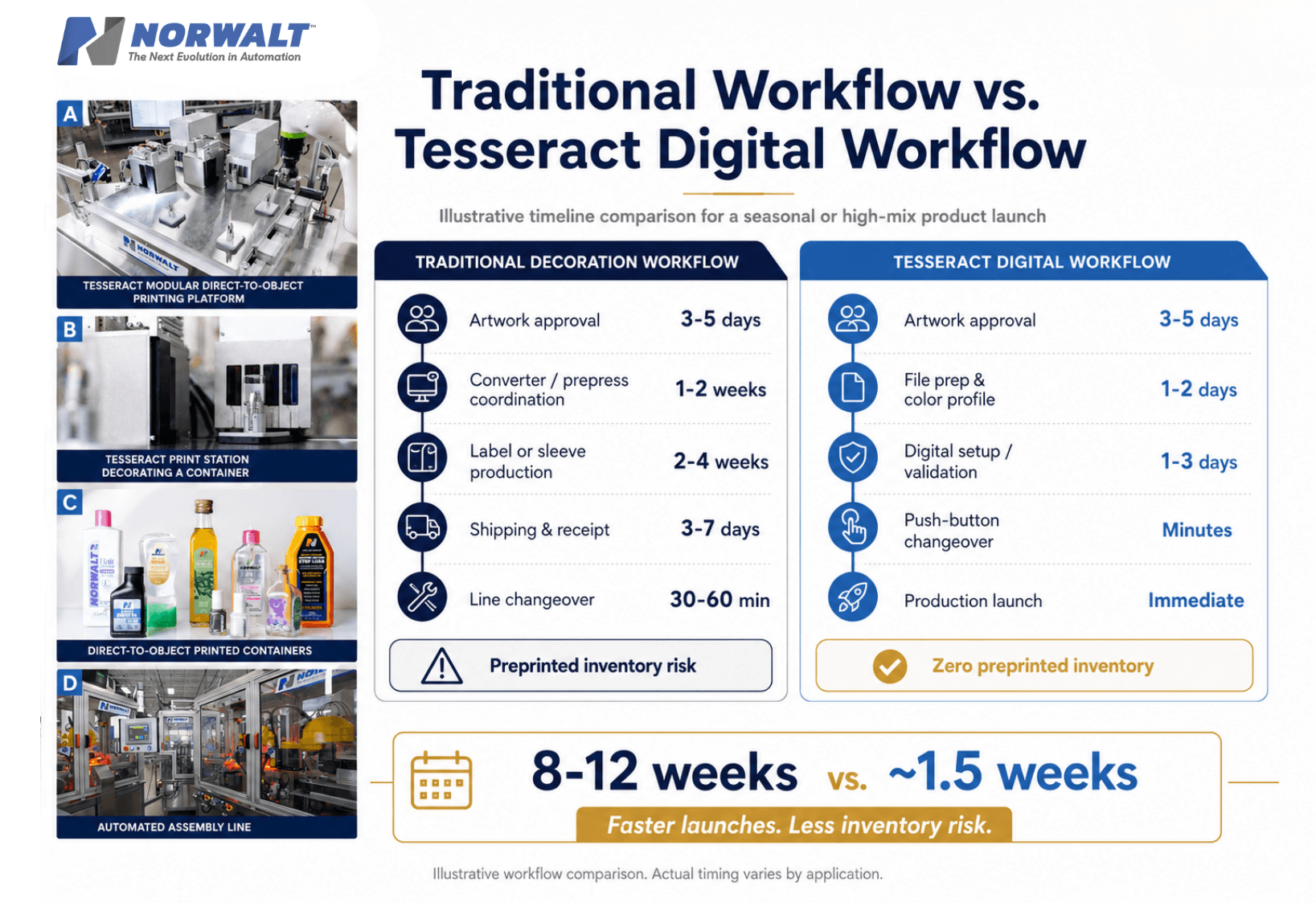
For large-scale label or sleeve projects, traditional decoration lead times can extend to 3 to 6 months once artwork approvals, converter scheduling, material procurement, production, shipping, receipt, and line readiness are considered. This is a major planning constraint and should be treated as a headline operational risk, not a minor schedule detail. Actual timing varies by supplier, project scope, artwork complexity, material availability, and approval requirements.
The question that every packaging professional asks about digital direct-to-object printing is whether the print quality is genuinely production-ready. It is the right question, and it deserves a substantive answer.
The Tesseract can be configured from 600 to 1200 DPI depending on the required balance of image quality, substrate, geometry, coverage, and throughput. Standard CMYK printing can be expanded with gamut extenders such as orange, green, violet, light cyan, light magenta, and light black. Additional spot colors can be added when an application requires tighter brand-color control, specialty marking, or a dedicated ink channel for a specific visual or functional requirement.
Selective varnish capability gives manufacturers another digital design lever. Matte varnish can be used to reduce glare, create a softer premium finish, or add contrast against gloss areas. Gloss varnish can be used to highlight brand elements, increase perceived depth, or create high-shelf-impact details. Because varnish is controlled digitally, these effects can vary by SKU, campaign, or product variant without requiring separate plates, screens, or physical tooling.
UV LED curing produces a durable, chemically resistant finished surface that withstands the handling, shipping, and shelf conditions that production containers encounter. Final inkset, resolution, varnish, cure, and pretreatment specifications are validated against the actual container, substrate, artwork, and end-use requirements before deployment.
Crucially, the Tesseract’s print quality has passed artistic evaluation with a major consumer products organization. This is not laboratory quality being marketed as production quality. This is production quality being validated through the same evaluation processes that major consumer products companies apply to their existing decoration methods.
The relevant question for packaging decision-makers is not whether digital decoration produces output identical to offset-printed labels at a microscopic level. The relevant question is whether the output meets the consumer acceptance threshold—whether a consumer picking up the product on a retail shelf or receiving it through a DTC channel perceives the packaging as meeting the brand’s quality standards. Current evaluations by major consumer products organizations indicate that the answer is yes.
The ink formulation process reinforces this quality position. Because inks are formulated from the inkset out for each specific substrate and application, adhesion performance, color accuracy, and durability are optimized for the actual production containers and end-use conditions rather than compromised by a one-size-fits-all ink approach. Color profiles are developed and validated during the application engineering process and become part of the production recipe, ensuring consistency across production runs.
Inline vision inspection provides an additional quality assurance layer that traditional decoration methods typically lack. While label application is typically sampled periodically, the Tesseract inspects 100% of decorated containers at production speed, rejecting any unit that does not meet quality specifications. This means that the defect escape rate for digital decoration can actually be lower than for traditional labeling, despite the newer technology.
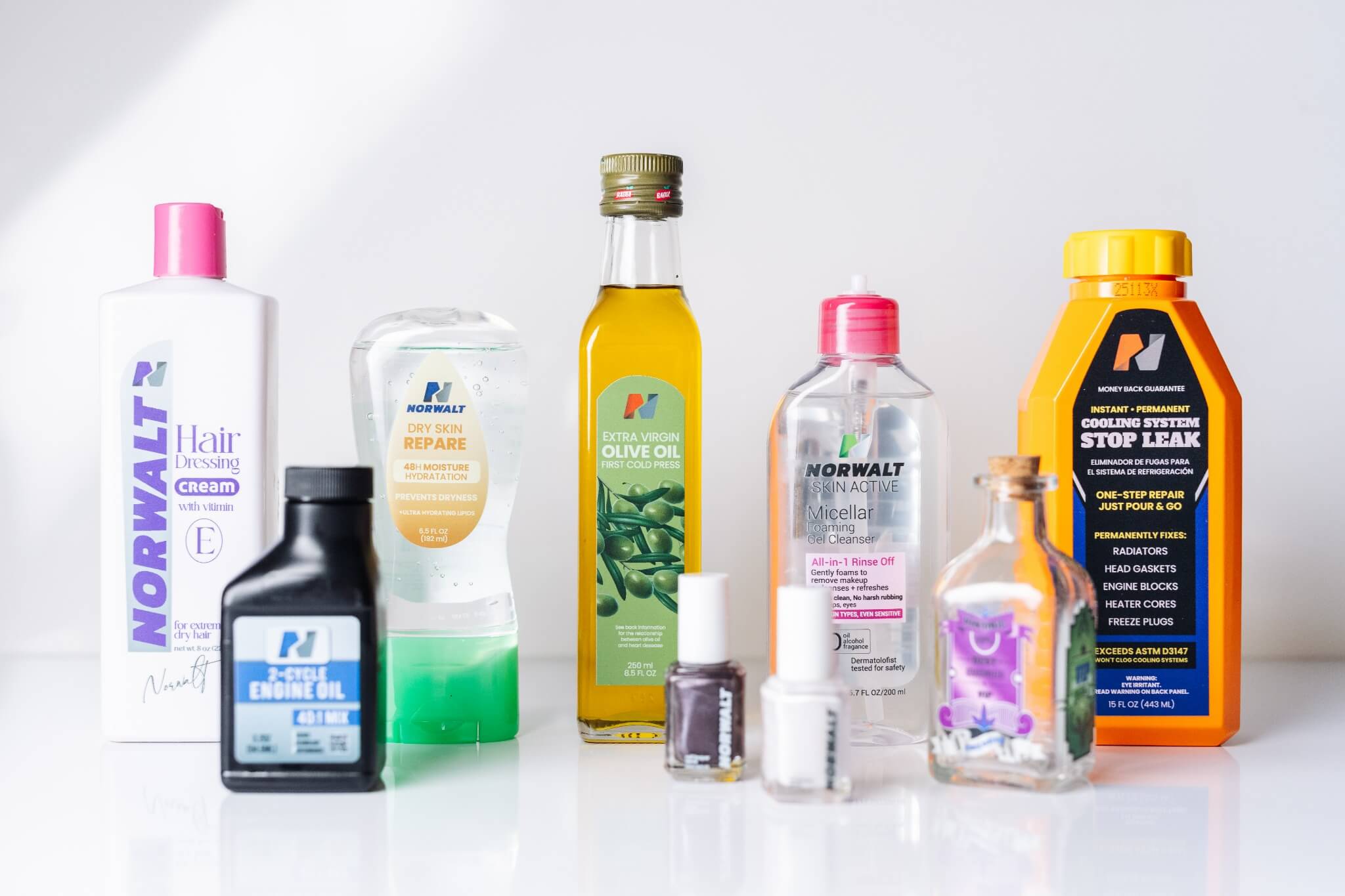
The question is not whether digital is identical to a label under a microscope. The question is whether it meets consumer acceptance thresholds on the shelf. The evaluations say yes.
Adopting digital decoration is a significant operational decision. Norwalt has structured a validation pathway that enables manufacturers to evaluate the Tesseract against their specific containers, artwork, and production requirements before committing to deployment. This pathway is designed to reduce adoption risk systematically.
The engagement begins with a technical and commercial consultation to assess fit. Norwalt’s application engineers work with the manufacturer’s packaging and operations teams to understand the container portfolio, artwork requirements, throughput targets, quality standards, and integration requirements. This consultation determines whether the manufacturer’s application profile aligns with the Tesseract’s capabilities and identifies any specific engineering considerations.
Based on the initial consultation, Norwalt conducts a formal application assessment. This includes substrate analysis, ink formulation recommendations, color and channel strategy, pre-treatment specification, varnish requirements, and preliminary production parameter development. The assessment evaluates whether the application is best served by CMYK alone, expanded gamut channels such as orange, green, violet, light cyan, light magenta, or light black, additional spot colors, matte varnish, gloss varnish, or some combination of these capabilities. The assessment produces a documented technical evaluation of the application’s feasibility and a preliminary specification for the production system.
The core of the validation pathway is facility-based testing with the manufacturer’s actual containers and actual artwork. This is not a simulation or a desktop exercise. Containers are decorated on the Tesseract platform using the resolution, inkset, gamut extender, spot color, varnish, pre-treatment, cure, and production parameters specified in the application assessment. The manufacturer evaluates the decorated containers against their quality standards, submits them for internal quality review, and assesses them in the context of their distribution and retail requirements.
For manufacturers requiring additional validation, Norwalt offers extended demonstration runs available for a small fee. These runs produce larger quantities of decorated containers for extended evaluation: shelf-life testing, distribution testing, consumer research, or retailer feedback. Extended demo runs provide the data needed to support a full business case and internal approval process.
Once the application is validated and the business case is approved, Norwalt’s engineering team develops a complete deployment plan: system specification, facility requirements, integration design, installation timeline, operator training, and ongoing support structure. Deployment is managed as a turnkey project from system build through commissioning and production validation.
The validation pathway is designed so that each step provides the information needed to make the next decision with confidence. You are never asked to commit to a deployment without having evaluated the Tesseract’s performance against your specific containers, your specific artwork, and your specific quality standards.
The competitive dynamics of CPG, pharmaceutical, and personal care markets are rewarding manufacturers who can launch faster, iterate more frequently, and respond to market signals in real time. The decoration supply chain—the last analog bottleneck in many otherwise digital, agile manufacturing operations—is the constraint that determines whether a manufacturer captures market windows or watches them close.
The Tesseract platform eliminates that constraint. Not incrementally, but structurally. Push-button artwork changeover. MOQ1 production. Zero preprinted inventory. Zero label obsolescence write-offs. 600 to 600 to 1200 DPI consumer-ready print quality, expanded-gamut and spot-color capability, and selective matte or gloss varnish options. Production-grade throughput at 60 to 80 parts per minute, depending on application configuration. Modular scaling that grows with your business. And all of it built on more than 50 years of automation engineering expertise, by a company that understands that the hardest problems in direct-to-object printing are the automation problems that happen between the container and the printhead.
The investment case is built on economics that extend well beyond per-unit cost: elimination of label procurement lead times, elimination of inventory carrying costs, elimination of obsolescence write-offs, recovery of changeover downtime, reduced vendor dependency, improved sustainability posture, and—most valuably—the ability to capture revenue from market windows that traditional decoration timelines would force you to miss.
The question is not whether digital decoration will become part of production-grade manufacturing. The question is whether you will adopt it in time to capture the competitive advantage it offers, or whether you will adopt it later, after your competitors have already moved.
Schedule a facility-based application validation with your actual containers and artwork. Evaluate the results against your quality standards, your economics, and your competitive timeline.
Schedule Validation → norwalt.comComet Series — Direct-to-Object Printing for Shaped Containers at Production Speed
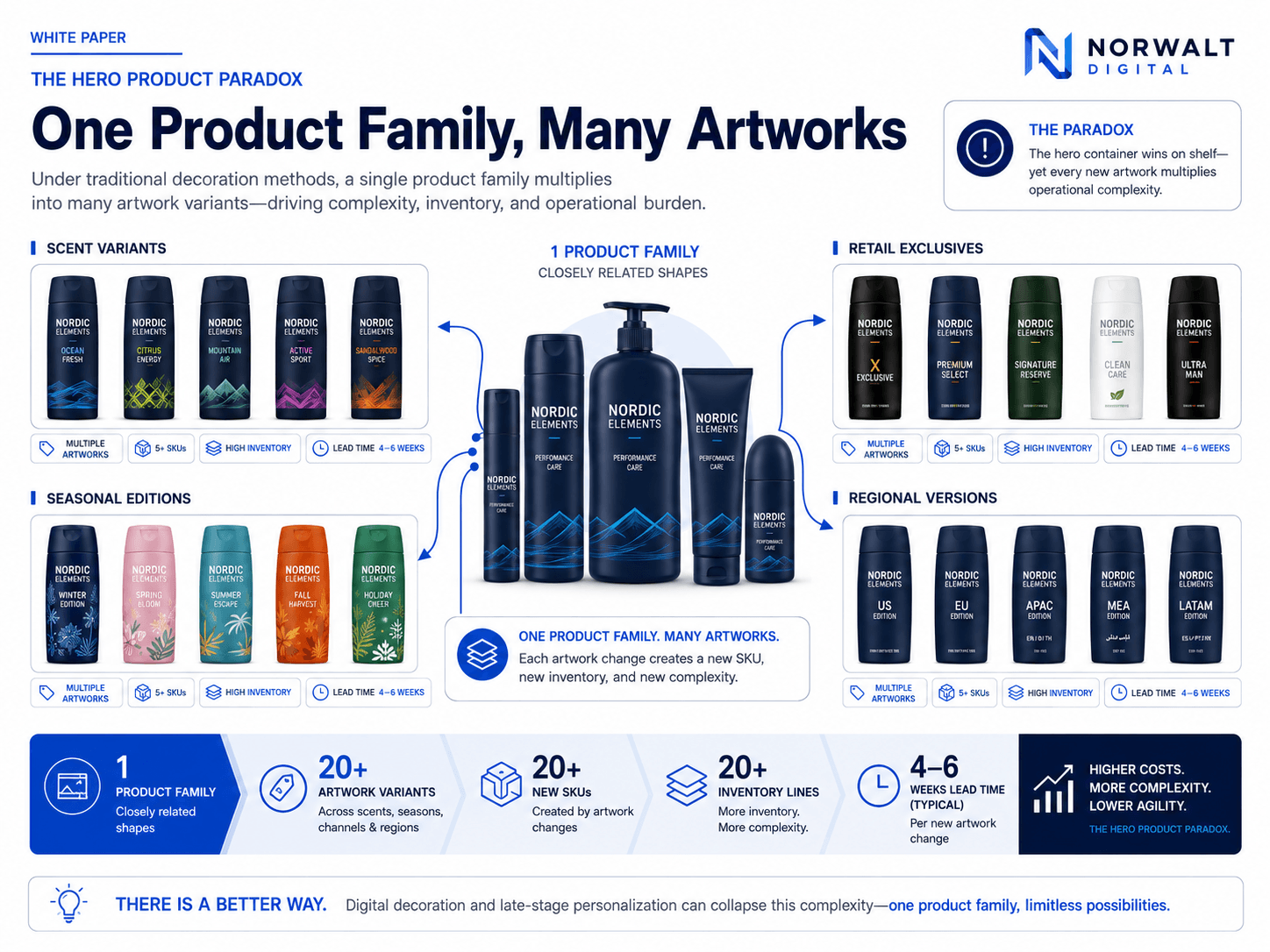
For the world's leading consumer packaged goods and pharmaceutical companies, hero products are the foundation of brand identity. The container shape itself often carries as much brand equity as the logo printed on it. A signature deodorant oval, a distinctive shampoo bottle silhouette, a premium personal care container with sculpted curves — these are the physical artifacts that consumers recognize at shelf, reach for by feel, and associate with trust.
But the operational reality behind these iconic shapes tells a different story. A single hero container may carry dozens of artwork variants: twelve scent options, seasonal limited editions, regional language versions, retail-exclusive graphics, promotional tie-ins. Each variant traditionally requires its own label SKU, its own sleeve inventory, its own minimum order quantity, its own forecast. The marketing power of a unified container format is systematically undermined by the decoration complexity that format demands.
The Comet Series from Norwalt Digital is a rotary inline or offline direct-to-object printing platform purpose-built for this problem. Named for the continuous orbital motion at its core, and engineered around that continuous motion rotary architecture, Comet delivers full-color, consumer-ready decoration directly onto shaped containers at 285 parts per minute. The platform can be configured from 600 to 1200 DPI using CMYK inksets, optional gamut extenders such as orange, green, violet, light cyan, light magenta, and light black, additional spot colors where required, and selective matte or gloss varnish using UV LED curable inks. Standard configurations provide 14 print stations, while expanded configurations can extend to 20 stations. Artwork changeover is measured in minutes, not hours. Shape changeover requires only tooling design changes. The platform handles containers from travel-sized to Costco-sized formats.
Critically, Comet can deploy in two modes: inline, integrated directly into an existing production line, or offline, as a standalone decoration cell that receives blank containers and outputs decorated product for multiple lines. The offline model is essential for risk-averse manufacturers who need to validate digital decoration without touching validated production lines — and it consolidates decoration for multiple lines into a single digital cell, reducing total equipment footprint while dramatically increasing artwork flexibility.
Norwalt is not a printer company. Norwalt Automation Group has spent more than fifty years engineering custom production lines for the world's largest CPG and pharmaceutical manufacturers. The Comet Series represents that automation heritage applied to decoration: the printhead is one component of a fully integrated production cell where the real engineering challenge — consistent container presentation at speed on complex geometries — is solved through custom mechanical design, precision tooling, and deep manufacturing process expertise.
The Jobs to Be Done framework asks a fundamental question: what job is the buyer hiring this machine to perform? Not what features does it have, but what progress does it enable? For the operations leaders, engineering directors, and packaging executives evaluating Comet, the answer is both specific and strategic.
"Help me run many artwork variants on my hero container shapes without the operational complexity, inventory burden, and slow changeovers of traditional decoration."
This is the central tension in modern CPG decoration: marketing needs artwork agility, operations needs production stability, and finance needs inventory efficiency. Traditional decoration methods force a painful compromise among all three. Every new artwork variant adds a label SKU to the warehouse, a line item to the procurement forecast, and a changeover event to the production schedule. The Comet Series resolves this tension by making artwork variation a digital event rather than a physical inventory event.
Introduce new decoration technology without disrupting validated production lines. Offline deployment lets manufacturers validate digital decoration as a standalone cell, completely decoupled from existing line qualifications while avoiding the long label and sleeve supply chain that can delay large-scale programs by 3 to 6 months.
Reduce total decoration equipment by consolidating multiple lines' decoration requirements into a single digital cell. One Comet offline cell can serve the decoration needs of multiple production lines.
Decorate non-cylindrical containers — ovals, tapers, sculpted surfaces — where adhesive labels wrinkle, shrink sleeves distort, and screen printing requires geometry-specific tooling for every shape variant.
Launch new artwork variants, limited editions, and promotional graphics in days rather than the 3 to 6 months that large-scale label and sleeve procurement cycles can require.
Functionally, the buyer needs a decoration platform that handles shaped containers at production speed with instant artwork changeover. The machine must match or exceed the throughput of existing labeling equipment, deliver consumer-grade print quality, and integrate cleanly into existing material flow — whether inline or offline.
Emotionally, the buyer needs confidence. Decoration is a visible, consumer-facing process — a quality failure here is a brand failure. The buyer needs to trust that this new technology will not introduce quality risk, production downtime, or integration complexity that damages their standing within the organization. Offline deployment directly addresses this emotional need: validate first, integrate later.
Socially, the buyer needs to be seen as the person who brought a measurable operational improvement to the organization — not the person who championed an expensive experiment. The economic case must be clear, the implementation path must be low-risk, and the results must be demonstrable. Norwalt's facility-based validation process is designed specifically to give the buyer this ammunition: real data on their actual containers with their actual artwork before any capital commitment.
Brand teams invest years and millions of dollars developing hero container designs. The shape of a deodorant stick, the curve of a premium shampoo bottle, the sculpted geometry of a skincare jar — these physical forms are among a brand's most valuable intellectual property. Consumers recognize them at shelf instantly. They convey quality, identity, and trust through tactile and visual cues that no flat label can replicate. The container IS the brand.
From a manufacturing perspective, a unified hero container format should simplify operations. One mold, one blow-molding setup, one injection process, one set of handling equipment across every variant. The container itself is standardized. The complexity should end there.
But decoration shatters that simplicity. Consider a mid-size personal care brand with a single hero deodorant shape. That one container format may carry twelve scent variants for the core line, plus three seasonal limited editions, plus two retailer-exclusive designs, plus regional language variants for international markets. Suddenly, one standardized container requires twenty or more distinct decoration configurations — and under traditional methods, each configuration means a separate physical inventory item.
Each label SKU requires its own minimum order quantity, often in the tens of thousands. Each requires its own procurement lead time, which on large-scale programs can extend to 3 to 6 months, its own forecast accuracy, and its own warehouse allocation. Seasonal designs that underperform leave thousands of obsolete sleeves in inventory. A retailer-exclusive promotion that exceeds expectations triggers emergency reorders with premium lead times. The operational simplicity that the hero container format was supposed to provide is systematically undermined by the decoration method applied to it.
This is the hero product paradox: the more successful the container design, the more artwork variants the brand team creates for it, and the more the decoration method becomes the operational bottleneck. The container format is an asset. The decoration complexity is the liability.
Comet lets brands keep the production benefits of a consistent container format while gaining the marketing flexibility of instant artwork changeover.
Not every container is a cylinder. In fact, the containers that carry the most brand equity — the shapes that consumers recognize and reach for — are almost never simple cylinders. Deodorant sticks are ovals. Premium shampoo bottles have sculpted shoulders and tapered bases. Skincare jars feature concave panels and ergonomic curves. Body wash containers use asymmetric profiles designed for grip comfort in wet conditions. These shapes are deliberate design decisions that serve both brand identity and consumer ergonomics.
But non-cylindrical containers present fundamental challenges for every traditional decoration method. Adhesive labels, designed for flat or uniformly curved surfaces, struggle when applied to compound curves. On ovals, the label must stretch or compress unevenly across the surface, creating wrinkles at transitions between flat and curved sections. On tapered containers, the label must accommodate continuously changing circumference, leading to edge lifting, bubbling at curvature transitions, and inconsistent adhesion zones. On sculpted surfaces with concave features, the label simply cannot conform — air pockets form, edges peel, and the decoration degrades visually over the product's shelf life.
Shrink sleeves offer full-surface coverage but introduce their own distortion problems on non-cylindrical shapes. The sleeve shrinks uniformly under heat, but a non-cylindrical container does not present uniform circumference. The result is predictable: artwork distortion on tapered sections, inconsistent print density across curved versus flat panels, and graphic registration errors where the sleeve's printed image fails to align with the container's actual geometry. Designers must pre-distort artwork to compensate, adding cost and constraining creative freedom.
Screen printing can handle some contoured surfaces, but each unique geometry requires dedicated tooling — fixtures, screens, and registration mechanisms specific to that container profile. When a brand introduces a new shape variant, the screen printing line requires entirely new tooling, at significant cost and lead time. The per-geometry tooling investment makes screen printing economically rigid, even when its quality can meet the application's demands.
The common thread: traditional decoration methods impose a tax on shape complexity. The more distinctive the container, the harder and more expensive it is to decorate. Direct-to-object printing eliminates the intermediary — no label, no sleeve, no screen — depositing ink directly onto the container surface regardless of its geometry, provided the container can be consistently presented to the print system.
The limitations of traditional decoration on shaped containers extend well beyond the physical challenges of application. Each method introduces operational costs that scale directly with the number of artwork variants a brand needs to manage — and for hero products, that number is large and growing.
Adhesive labels require separate print runs for each artwork variant, each with minimum order quantities typically in the range of tens of thousands of units. For a hero container with twenty decoration variants, that means twenty separate label SKUs in inventory, twenty separate procurement cycles, and twenty separate forecasts that must be accurate enough to avoid both stockouts and obsolescence. Label changeover on the production line adds downtime: the applicator must be adjusted for each label variant, registration re-verified, and first-article quality confirmed. On shaped containers, these changeovers are particularly time-consuming because adhesion parameters, pressure roller settings, and application speed must be tuned for each label's interaction with the container's geometry.
Shrink sleeves add the cost of pre-distortion artwork development for non-cylindrical containers — a specialized design process that must be repeated for each new artwork variant. Sleeve material costs are higher than pressure-sensitive labels, and the heat-shrink application process requires precise tunnel temperature control that varies with container geometry. Seasonal or limited-edition variants face the same MOQ constraints as labels, but with higher per-unit material costs. Unsold seasonal sleeve inventory represents a particularly expensive form of waste.
Screen printing delivers excellent durability and tactile quality but at the cost of extreme inflexibility. Each color requires a separate screen, each container geometry requires dedicated fixturing, and changeover between artwork variants involves screen changes, ink changes, and registration realignment. For a hero container with frequent artwork changes, screen printing is operationally prohibitive — the per-changeover cost and downtime make it viable only for high-volume, low-variant applications.
The cumulative effect is clear: traditional decoration methods impose a scaling penalty on artwork variety. Every new variant adds marginal cost in inventory, procurement, changeover, and waste. For brands that compete on variety, freshness, and speed to market, this scaling penalty directly constrains their ability to execute their marketing strategy.
| Operational Factor | Adhesive Labels | Shrink Sleeves | Screen Printing |
|---|---|---|---|
| Shaped Container Fit | Poor — wrinkles, bubbles on curves | Moderate — distortion on non-round | Geometry-specific tooling required |
| Per-Variant Inventory | Separate SKU per variant | Separate SKU per variant | Screens + inks per variant |
| Artwork Changeover | Roll change + adjustment | Roll change + tunnel tuning | Screen + ink + fixture change |
| MOQ Pressure | High (10,000s typical) | High (higher material cost) | Moderate (but high setup cost) |
| Limited Edition Viability | Constrained by MOQ | Constrained by MOQ + cost | Rarely viable |
The Comet Series takes its name from the motion at its heart. Like a comet tracing a continuous, predictable arc through space, each container travels a smooth rotary path through the print zone — no stopping, no indexing, no start-stop cycling. And just as the ancients called the planets “wandering stars” for the way they moved while the fixed stars held their place, the Comet Series lets your hero container keep its constant, instantly recognizable form while its artwork wanders freely across scents, seasons, regions, and campaigns. Constant shape, limitless decoration — adaptability in motion.
The Comet Series is a rotary inline or offline direct-to-object printing platform engineered for one purpose: delivering production-speed digital decoration on shaped containers with the reliability, throughput, and integration standards that major CPG and pharmaceutical manufacturers require.
At its core, Comet uses a continuous motion rotary architecture — the same fundamental mechanical principle that powers the rotary labelers already present in virtually every high-speed packaging line. Containers enter the system, are captured by custom-designed tooling, rotated through a series of print stations at continuous speed, and exit as fully decorated product. There is no start-stop indexing, no intermittent motion, no acceleration-deceleration cycling. The system runs at a sustained 285 parts per minute in continuous motion.
The print system can be configured from 600 to 1200 DPI using UV LED curable inks. Beyond standard CMYK, Comet can support gamut extenders such as orange, green, violet, light cyan, light magenta, and light black, as well as additional spot colors when a brand color, opacity requirement, or specialty effect calls for a dedicated channel. Selective matte varnish and gloss varnish can also be applied digitally for protection, finish, and shelf impact. The standard configuration provides 14 print stations; configurations with expanded color capability extend to 20 stations. Inks are formulated from the inkset out for each specific substrate — this is not a one-size-fits-all ink system but a chemistry tailored to the adhesion, flexibility, and durability requirements of each container material. UV LED curing provides instant, consistent cure without the heat load of conventional UV, protecting heat-sensitive substrates and container contents.
The platform handles containers across the full size range that CPG and personal care manufacturers produce: from travel-sized containers sold in convenience and airport retail through standard consumer formats to the large-format containers sold through club-store channels like Costco. Within each container format, the tooling is custom-designed around the specific product geometry — not adapted from a generic holder, but engineered to capture, orient, stabilize, and present each unique container shape with the positional consistency that high-resolution digital printing demands.
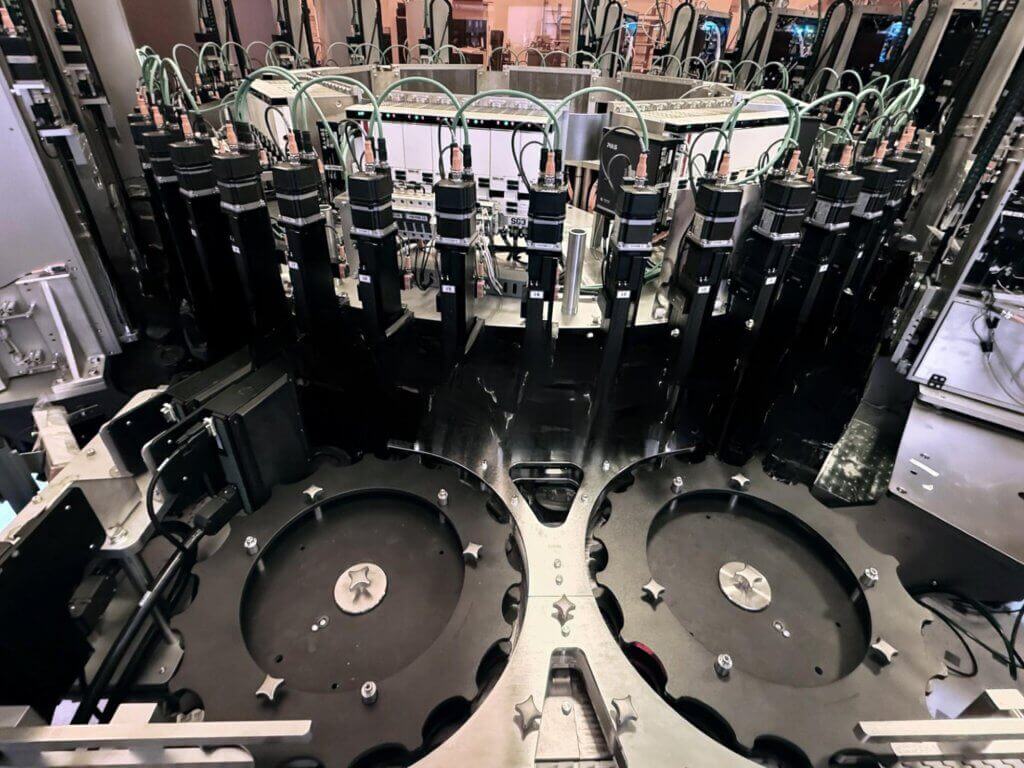
Comet is not limited to basic process color. Depending on the application, the platform can run CMYK, expanded gamut with orange, green, violet, light cyan, light magenta, and light black, additional spot colors, and selective matte or gloss varnish. That flexibility allows the print architecture to be matched to the product family, substrate, artwork coverage, and visual requirements.
Artwork changeover is measured in minutes. Because the decoration is digital, switching from one artwork variant to another requires loading a new print file — not changing rolls, screens, sleeves, or physical tooling. This transforms artwork variation from an operational event requiring line stoppage, material change, and quality revalidation into a digital event that occurs within the normal flow of production.
Shape changeover — moving from one container geometry to another — requires tooling design changes, as the custom-designed holders that present each container to the print system are geometry-specific. This is by design: the precision of container presentation that enables consistent high-resolution print on complex shapes cannot be achieved with universal holders. The trade-off is deliberate — supreme print consistency on each geometry, with tooling changes when the geometry changes.
The physical footprint of the Comet platform is designed to match that of a rotary labeler. This is not coincidental. For manufacturers evaluating inline deployment, the platform must fit in the same line position and floor space as the labeling equipment it may replace. For offline deployment, the compact footprint means the decoration cell requires minimal floor space relative to its throughput capacity.
The Norwalt differentiator is not the printhead. Industrial inkjet printheads are available from multiple suppliers. The differentiator is the automation engineering that presents shaped containers to those printheads consistently, at speed, in a production environment. That is a machine-building challenge, not a printing challenge — and it is precisely the kind of challenge Norwalt has solved for fifty years.
In direct-to-object printing, the printhead is the visible technology. But the hard engineering problem — the problem that separates laboratory demonstrations from production-grade systems — is container presentation. At 285 parts per minute on a continuous motion rotary platform, every container must be captured, oriented, stabilized, and presented to the print system with positional accuracy measured in fractions of a millimeter. Any deviation in position, angle, or rotation translates directly into print registration errors visible to the consumer.
For cylindrical containers, this challenge is significant but well-understood. For shaped containers — ovals, tapers, sculpted profiles, asymmetric cross-sections — the challenge increases by an order of magnitude. A cylindrical container has rotational symmetry: its cross-section is identical at every angular position. An oval deodorant container does not. The distance from the container surface to the printhead changes continuously as the container rotates, the curvature varies across every panel, and the print system must compensate for these geometric variations while maintaining precise high-resolution registration on a moving target.
The Comet platform addresses this through custom-designed tooling for each container geometry. Each set of tooling is engineered specifically for its target container — the capture mechanism, the orientation features, the stabilization points, and the rotational indexing are all designed around the container's actual three-dimensional geometry. This is not a universal chuck with adjustable jaws; it is a purpose-built holding system that positions each specific container with the repeatability required for production-quality digital print.
The continuous motion rotary architecture provides inherent advantages for consistent presentation. Unlike linear or indexing systems that must accelerate and decelerate containers at each print station — introducing vibration, settling time requirements, and throughput limitations — the rotary system moves containers at constant velocity through the print zone. The container and the print system are in continuous, synchronized motion. This eliminates the dynamic disturbances that intermittent motion systems must manage and provides the stable, predictable print environment that high-resolution digital printing demands.
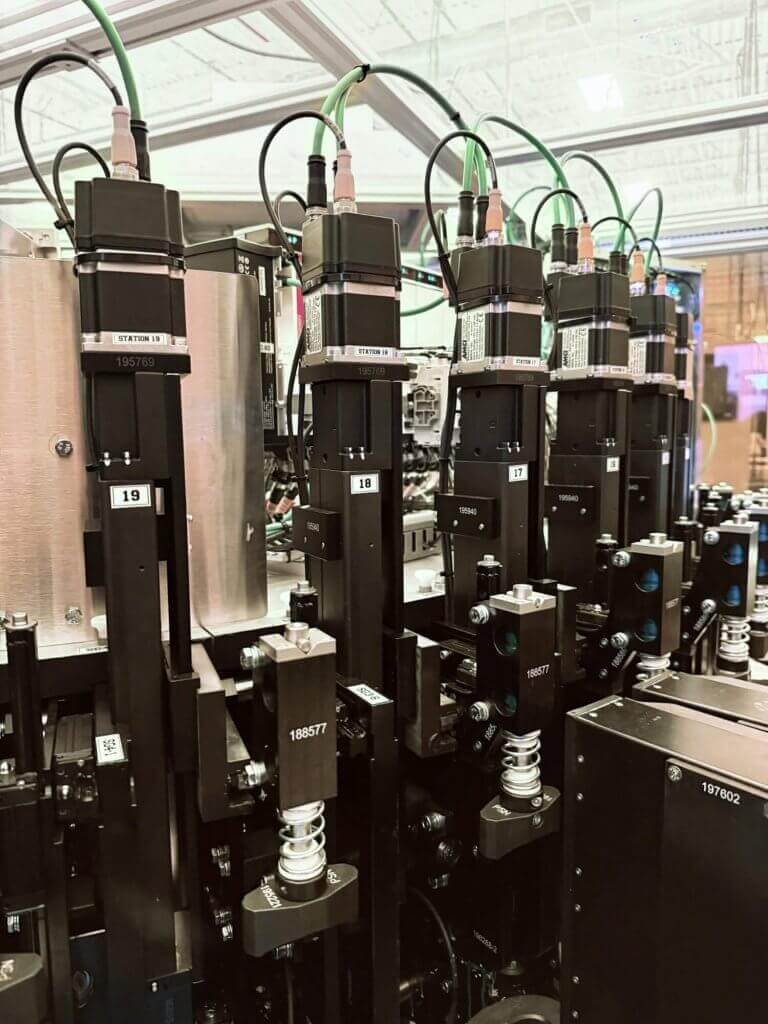
The Comet platform supports two fundamentally different deployment models, each addressing different operational needs and risk profiles. Understanding both is essential to evaluating where and how digital decoration fits within an existing manufacturing operation.
In inline deployment, the Comet platform integrates directly into an existing production line, occupying the line position and performing the function currently served by a labeler, sleeve applicator, or other decoration station. Containers flow from upstream processes (filling, capping) through the Comet system and exit as decorated product, continuing to downstream processes (cartoning, case packing) without interruption.
In offline deployment, the Comet platform operates as a standalone decoration cell, physically separate from production lines. Blank containers are fed to the cell from inventory or directly from container manufacturing; decorated containers are output to inventory or directly to production lines for filling. The decoration step is completely decoupled from the production line.
Offline deployment lets you add digital decoration without touching a validated production line.
For pharmaceutical manufacturers and large CPG operations, production lines represent validated, qualified systems. Any modification to a validated line triggers revalidation requirements — a process that consumes months, significant engineering resources, and regulatory attention. The prospect of integrating new decoration technology into a validated line is, for many organizations, a non-starter regardless of the technology's merit.
Offline deployment eliminates this barrier entirely. The Comet cell operates as an independent piece of equipment with no physical or control integration to existing production lines. Validated lines continue to run unchanged. Blank containers are decorated offline and fed to the lines exactly as pre-decorated containers would be — the production line cannot distinguish between a container decorated by a Comet cell and one decorated by any other method.
This has profound implications for adoption risk. The offline model allows manufacturers to validate the Comet platform's output quality, throughput, and operational characteristics on their actual production containers without any line modification. If the validation confirms expectations, the manufacturer can scale by adding offline capacity. If they later choose to integrate inline, that decision is made from a position of operational confidence rather than speculative investment.
The offline model also enables a consolidation strategy that inline deployment cannot. Consider a manufacturer with three production lines, each with its own dedicated labeling or decoration station. Three sets of equipment, three sets of spare parts, three changeover schedules, three operator training requirements. An offline Comet cell can consolidate decoration for all three lines into a single digital cell, reducing total equipment count, maintenance burden, spare parts inventory, and operator training requirements while increasing artwork flexibility across all three lines simultaneously.
This consolidation is particularly powerful for manufacturers producing multiple product formats on different lines that share the same container geometry. A single offline Comet cell can decorate containers for all formats, with artwork changes happening digitally between batches, eliminating the redundant decoration infrastructure that exists when each line manages its own decoration independently.
Norwalt Automation Group is not a printer company. This distinction is not marketing language — it is a fundamental statement about capability, approach, and heritage. Norwalt has spent more than fifty years engineering custom automated production lines for the world's largest CPG and pharmaceutical manufacturers. The company's core competency is solving complex production automation challenges: designing, building, and integrating machinery that handles, orients, inspects, assembles, fills, and packages physical products at production speed with production-grade reliability.
The Comet Series is an expression of that heritage applied to a specific production challenge: high-speed decoration of shaped containers. The print engine — the inkjet technology that deposits ink on the container surface — is one component of a much larger engineered system. The greater engineering challenge, and the area where Norwalt's automation expertise is decisive, encompasses everything that surrounds the print engine: how containers are fed into the system, how they are captured and oriented by custom tooling, how they are presented to the print system with sub-millimeter positional consistency at 285 parts per minute, how print quality is verified through integrated vision inspection, and how the entire cell integrates with upstream and downstream material flow.
This machine-builder perspective produces a fundamentally different product than what a printer company would build. A printer company starts with print technology and adapts it for production. Norwalt starts with the production environment — the speeds, the container geometries, the integration requirements, the reliability standards, the regulatory constraints — and engineers the print technology into a system designed from the ground up to meet those requirements.
For each container geometry, Norwalt's engineering team designs custom tooling: the mechanical systems that capture, hold, orient, and present that specific container to the print system. This is not adaptation of generic components but purpose-built mechanical design informed by decades of experience handling physical products in automated systems. The result is the consistent container presentation that production-grade digital print on shaped containers demands — a result that no universal or adjustable holder can replicate across the range of geometries that CPG manufacturers produce.
The economic case for the Comet Series is not built on a single cost advantage but on the cumulative impact across multiple cost categories that traditional decoration methods impose. For manufacturers managing hero products with many artwork variants on shaped containers, these costs compound — and the Comet platform's digital architecture addresses each one.
Label and sleeve material elimination. Direct-to-object printing replaces the physical label or sleeve entirely. The cost per container shifts from material cost (label substrate, adhesive, print, sleeve film) to ink cost. For many applications, particularly on shaped containers where premium label materials are required for acceptable adhesion and appearance, the per-unit decoration cost with Comet can be a fraction — potentially one-tenth — of the traditional labeling cost.
Inventory carrying cost reduction. With traditional decoration, a hero product with twenty artwork variants requires twenty distinct pre-decorated container SKUs in inventory (or twenty label/sleeve SKUs plus blank containers). With Comet, inventory reduces to a single blank container SKU. The decorated variant is created at the point of decoration, not at the point of container or label manufacturing. This eliminates the carrying cost, warehouse space, and forecast risk associated with per-variant inventory.
Obsolescence elimination. Seasonal artwork, promotional graphics, and limited-edition designs carry inherent forecast risk under traditional methods. Overproduction of sleeves or labels for a seasonal campaign that underperforms creates write-off costs. With digital decoration, artwork is a file — there is no physical inventory to become obsolete.
Changeover time reduction. Artwork changeover on the Comet platform is measured in minutes — the time to load a new digital print file. Traditional label changeovers on shaped containers, which require roll changes, applicator adjustments, adhesion parameter tuning, and first-article quality verification, typically consume thirty minutes to over an hour per changeover event. For a production schedule with multiple changeovers per shift, this difference represents substantial recovered production time.
Equipment consolidation. Offline deployment enables the replacement of multiple per-line decoration stations with a single digital cell. The capital, maintenance, spare parts, and training costs of three labeling stations are consolidated into one Comet cell. This consolidation also simplifies production scheduling — decoration capacity is pooled rather than siloed by line.
Time-to-shelf acceleration. New artwork variants move from design approval to production in days rather than the weeks or months required for label or sleeve procurement. This enables rapid response to competitive moves, faster seasonal campaign execution, and the ability to test limited-edition designs in small quantities before committing to large runs.
| Cost Category | Traditional Decoration | Comet Series |
|---|---|---|
| Per-Unit Decoration Cost | Label/sleeve material + application cost | Ink cost only — potentially 1/10th |
| Inventory SKUs (20 variants) | 20 label SKUs + blank containers | 1 blank container SKU |
| Artwork Changeover Time | 30–90 minutes per changeover | Minutes (digital file load) |
| New Artwork Lead Time | 4–12 weeks (procurement cycle) | Days (design to production) |
| Seasonal/Limited Edition Risk | MOQ commitment, obsolescence risk | Print on demand, zero waste risk |
| Equipment (3-line operation) | 3 decoration stations + spares | 1 offline cell serves all 3 lines |
| Shaped Container Quality | Wrinkling, peeling, distortion | Direct bond — conforms to geometry |
| Minimum Order Quantity | 10,000–50,000+ per variant | Batch of 1 — no minimum |
The question isn't whether digital print is always better than a label. It's whether the label's quality advantage is worth the operational cost of slower launches and higher inventory.
The situation: A leading personal care company manufactures a premium deodorant line built around a single hero container — a distinctive oval stick with sculpted grip features that has become one of the brand's most recognized physical assets. The container shape is protected intellectual property and a significant competitive advantage at shelf.
The core line includes twelve scent variants, each requiring unique full-wrap artwork. Beyond the core line, the brand runs three to four seasonal limited editions per year (holiday, summer, back-to-school), two retailer-exclusive designs for major accounts, and periodic promotional variants for cross-brand campaigns. In total, the single hero container shape carries more than twenty active artwork configurations at any given time.
The traditional approach: Each artwork variant requires its own shrink sleeve SKU, ordered against forecast in minimum quantities of 25,000 units. With twenty-plus active variants, the company maintains more than 500,000 sleeves in inventory at any time, consuming warehouse space and carrying cost. On large-scale projects, sleeve lead time from artwork approval to delivered inventory can stretch to 3 to 6 months.
Seasonal designs present a particular challenge. The brand team must commit to sleeve quantities months before the selling season, based on forecast. A holiday limited edition that underperforms expectations leaves thousands of obsolete sleeves — a direct write-off. A summer edition that exceeds expectations cannot be replenished within the season because sleeve procurement cannot respond within the selling window. The brand team has learned to be conservative with limited editions, which constrains the very marketing agility that limited editions are supposed to provide.
Additionally, the oval container shape causes consistent sleeve distortion. The heat-shrink process compresses the sleeve unevenly around the oval cross-section, distorting artwork on the narrow sides and creating visual inconsistencies that the brand team has learned to accept but never resolved. Pre-distortion compensation in artwork design adds cost and constrains the graphic design team's creative freedom.
The Comet offline solution: A single Comet offline decoration cell replaces the sleeve application process entirely. Blank oval containers — one SKU — are fed to the cell from container manufacturing. Artwork variants are loaded digitally, and the cell produces decorated containers for each variant on demand.
Inventory drops from twenty-plus sleeve SKUs to one blank container SKU. New artwork variants go from design approval to production-ready in days rather than the 3 to 6 months that large-scale sleeve programs can require. Seasonal limited editions can be produced in quantities matched to actual demand — hundreds or thousands, not tens of thousands — with the ability to replenish within days if demand exceeds expectations. The financial risk of seasonal decoration is essentially eliminated.
Print quality on the oval container improves because direct-to-object printing deposits ink directly onto the container's actual geometry rather than shrinking a pre-printed film around it. There is no distortion compensation, no shrink-rate variability, no inconsistency between the flat and curved faces of the oval. The decoration conforms to the container because the decoration is applied to the container, not wrapped around it.
The situation: A major CPG manufacturer operates three production lines in a single facility, all producing variants of a personal care product using the same hero container geometry. Each line has its own dedicated labeling station — three labelers, three sets of spare parts, three changeover schedules, three operator training programs. The lines run different product variants (different formulations, different artwork) but share the same container.
The three labeling stations represent a significant maintenance burden. Each requires regular preventive maintenance, calibration, and spare parts inventory. When one labeler experiences a mechanical issue, that entire line stops — even if the problem is with the decoration equipment rather than the filling or packaging equipment. Label changeovers on the shaped containers are particularly time-consuming, requiring adhesion parameter adjustments and quality verification for each variant's interaction with the container's compound curves.
Production scheduling is complicated by the per-line decoration constraint. If Line 1 needs to run a variant whose labels are currently staged on Line 2's labeler, either the labels must be physically moved and the Line 2 labeler reconfigured, or Line 1 must wait for its own label stock to be staged. Decoration logistics drive production scheduling decisions that should be driven by filling and packaging optimization.
The Comet offline solution: A single Comet offline decoration cell replaces all three per-line labeling stations. Blank containers are fed to the cell, decorated with whatever artwork variant is needed, and output to a decorated container buffer that feeds all three production lines.
The consolidation impact is substantial across multiple dimensions:
The net effect is a reduction in total decoration infrastructure cost, a recovery of production time previously lost to per-line changeovers, and an increase in scheduling flexibility — all achieved through a single capital investment in one Comet offline cell rather than ongoing investment in three separate decoration systems.
Print quality in direct-to-object decoration is measured against a demanding standard: the consumer's expectation at shelf. The Comet platform can be configured from 600 to 1200 DPI depending on the required balance of image quality, substrate, geometry, coverage, and throughput. Standard CMYK printing can be expanded with gamut extenders such as orange, green, violet, light cyan, light magenta, and light black. Additional spot colors can be added when an application requires tighter brand-color control, specialty marking, or a dedicated channel for a specific visual or functional requirement. Selective matte varnish and gloss varnish provide another digital design lever for protection, tactile contrast, visual emphasis, and premium shelf impact. This quality level has been evaluated by major CPG companies against their existing decoration standards.
But quality on shaped containers must be evaluated in a broader context than resolution alone. On non-cylindrical containers, traditional decoration methods introduce quality problems that digital printing eliminates. Adhesive labels wrinkle at curvature transitions, creating visible texture inconsistencies. Label edges lift on compound curves, exposing adhesive and creating potential contamination concerns in pharmaceutical and personal care applications. Shrink sleeves distort artwork on non-round geometries, producing visual inconsistencies that consumers perceive as quality defects even when the print itself is technically acceptable.
Direct-to-object printing eliminates these decoration-method artifacts entirely. The ink bonds directly to the container surface, conforming to whatever geometry that surface presents. There are no edges to lift, no adhesive to fail, no film to distort. On shaped containers, digital print does not merely match label quality — it solves quality problems that labels inherently create on complex geometries.
Because finish is digitally controlled, Comet can vary aesthetic effects by SKU or campaign without requiring separate plates, screens, or physical tooling. Matte varnish can soften glare and create a premium understated finish. Gloss varnish can highlight logos, create contrast, and increase perceived depth. The print architecture, inkset, and finish package can all be validated against the actual container family and end-use requirement before deployment.
The UV LED curable ink system provides additional quality advantages. Cure is instantaneous and consistent — there is no drying time variability, no sensitivity to ambient humidity, and no risk of smudging during downstream handling. The cured ink film provides chemical resistance, abrasion resistance, and adhesion durability appropriate for the product's intended use environment. Ink formulations are developed from the inkset out for each specific substrate, ensuring optimal adhesion and performance on each container material rather than relying on a generic formulation across dissimilar substrates.
Integrated vision inspection verifies print quality on every container, providing real-time quality data and rejecting containers that do not meet specifications. This 100% inspection capability exceeds the statistical sampling approach used in most traditional decoration quality programs, providing higher confidence in outgoing quality and faster detection of any process deviation.
Norwalt's implementation approach is designed to address the central concern of every operations leader evaluating new decoration technology: will this work on my products, at my standards, in my production environment? The answer to that question cannot come from specifications on a page or samples produced under laboratory conditions. It must come from testing with representative production containers and actual artwork under conditions that reflect the target production environment.
Norwalt's facility-based validation process provides exactly this. Manufacturers send representative containers and artwork files to Norwalt's facility, where the Comet platform produces decorated samples using the actual container geometry, actual substrate material, actual artwork, and the intended print architecture for production. That validation can include resolution, inkset, gamut extenders, spot colors, matte or gloss varnish, pretreatment, cure, and other production parameters matched to the application. These samples are then evaluated against the manufacturer's existing quality standards — color accuracy, resolution, adhesion, durability, chemical resistance, and finish performance — using the manufacturer's own evaluation criteria.
This validation occurs at Norwalt's facility, not on the manufacturer's production floor. There is no disruption to existing operations, no line time consumed, no production risk introduced. The manufacturer receives physical samples and quality data that directly answer the question of whether the Comet platform meets their specific requirements on their specific products.
For manufacturers pursuing the offline deployment model, the validation process is particularly straightforward. The offline cell is a standalone piece of equipment — its integration requirements are limited to container infeed and decorated container outfeed. There is no line control integration, no upstream/downstream synchronization, and no modification to existing validated production processes. The offline Comet cell can be installed, commissioned, and validated as an independent piece of equipment, producing decorated containers that are indistinguishable from traditionally decorated containers from the production line's perspective.
This low-risk implementation path — facility validation followed by offline deployment — is designed specifically for the risk-averse decision-making environment of major CPG and pharmaceutical manufacturers. The buyer does not need to advocate for a line modification. They need to advocate for an offline pilot that validates the technology on their actual products, in a contained scope, with a clear success metric. If the pilot succeeds, scale-up is a capacity decision, not a technology risk decision.
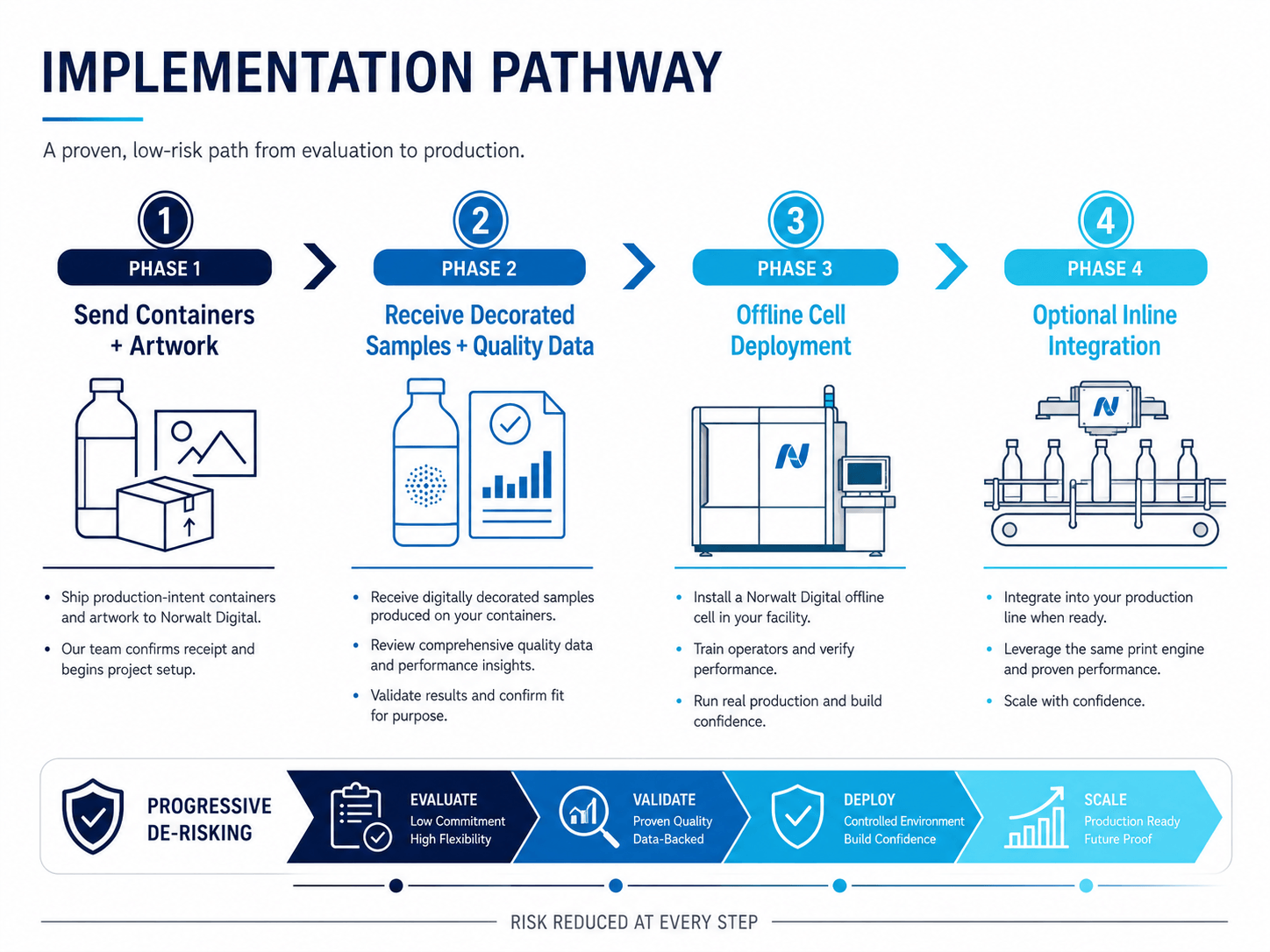
For manufacturers whose brand identity lives in the shape of their containers, the Comet Series eliminates the tension between container consistency and artwork agility. Offline deployment provides the lowest-risk entry point in digital decoration — validate on your products at Norwalt's facility, deploy as a standalone cell, and scale based on results.
One product family. Expanded color capability. Selective matte or gloss varnish. Minutes to changeover. No label inventory. No sleeve distortion. No compromise.
Schedule Facility Validation →norwalt.com | Contact your Norwalt Digital representative to begin the validation process
